
Polyethylene Gas Pipe: Colour, Standards and Requirements
A review of SDR11 polyethylene gas pipe requirements, governing engineering standards, yellow visual coding, and design distinctions from water pipes.
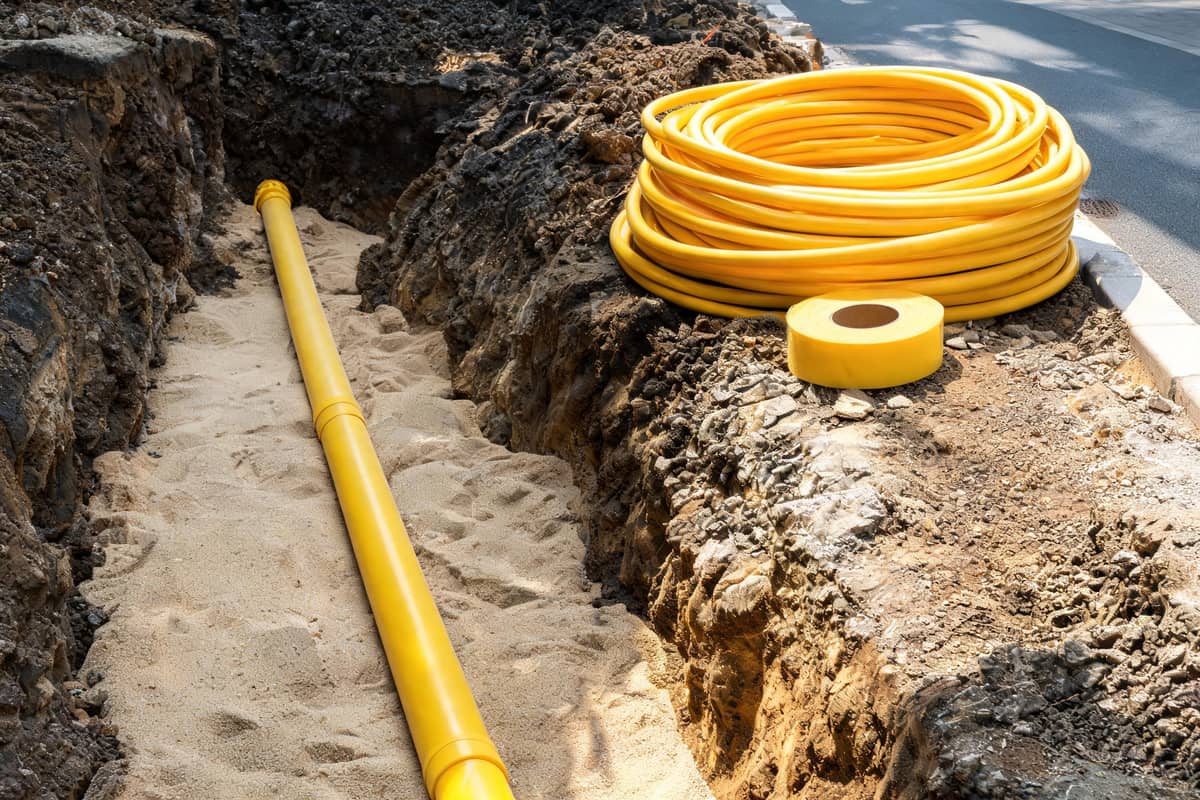
Design Standards and Technical Gas Pipe Specifications
Natural gas distribution across municipal and rural networks demands the highest safety factors compared to other fluid systems. Polyethylene gas pipes are manufactured in accordance with international standards ISO 4437 and EN 1555-2, as well as the National Iranian Gas Company IGS standard. These pipes are dimensioned exclusively in the SDR 11 series to provide sufficient wall thickness against internal pressures and external soil overburden.
Supplied in PE80 and PE100 compounds across outside diameters from 20 to 250 mm, gas pipe resins must demonstrate outstanding resistance to Slow Crack Growth and Rapid Crack Propagation during low-temperature gas expansion. Grade PE100 provides higher tensile endurance and larger safety margins for higher operating pressures in gas distribution grids.
Colour Identification Coding and Storage Protection
Underground utility standards dictate that polyethylene gas pipes must be solid yellow or black with co-extruded longitudinal yellow stripes. This visual identification clearly differentiates gas lines so that utility contractors during subsequent excavation immediately recognise the hazardous nature of the buried asset and avoid confusing it with water or sewer mains.
While black polyethylene incorporates carbon black that protects against solar ultraviolet radiation, solid yellow pipe is more sensitive to sunlight degradation. Consequently, installation codes require yellow gas pipe to be stored under shelter or covered storage, avoiding prolonged solar exposure prior to backfilling within the trench.
Key Distinctions Between Gas and Water Piping
A fundamental distinction between gas and water pipelines lies in allowable operating pressure calculations. Allowable pressure in a gas network does not equal the nominal pressure (PN) rating of an identical pipe in water service, because gas engineering enforces a larger design safety factor. The maximum operating pressure of the gas line is governed by gas company regulations and the project design consultant, and must be taken from design documents before ordering.
Furthermore, mechanical compression fittings common in water piping are not used in gas networks. Gas lines are jointed by electrofusion or butt fusion, and welding must be carried out with suitable equipment by a qualified operator. The jointing procedure details for each project are established by gas company regulations and the project supervisor.
Supply Packaging and Procurement Requirements
Polyethylene gas pipe is supplied in both coils and straight bars; coils are suited for continuous runs and branch service connections, while straight bars are used for direct distribution lines. Available coil and bar lengths are confirmed upon inquiry. Sourcing pipe for gas projects requires full compliance with technical submittals and manufacturer approvals required by the project supervisor.
Comprehensive dimensional tables detailing wall thicknesses and nominal weights for the SDR 11 series are available on the gas pipe product page. To check current pricing and confirm specifications for your gas distribution project, submit your required sizes and quantities via the website inquiry form or contact our sales team by phone.
Table of Contents
Caspian Sanat ZAAL
Product technical guides
These guides are based on the standards and technical data of the products themselves. Contact us to confirm the size and pressure class for your project.