
What Are SDR and PN Pressure Class in Polyethylene Pipe?
An engineering overview of SDR ratios, nominal pressure class calculations in polyethylene grades, and key parameters for selecting pipeline ratings.
Definition of Standard Dimension Ratio (SDR)
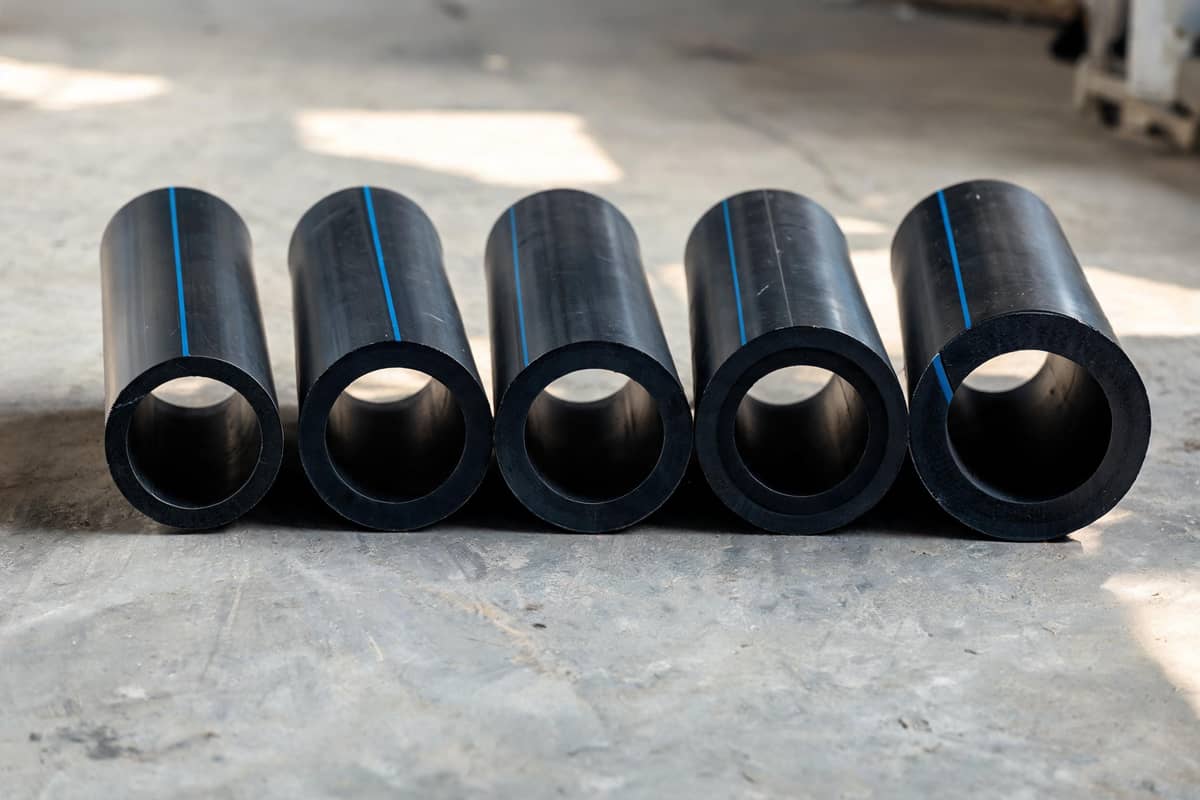
The Standard Dimension Ratio, abbreviated as SDR, is one of the most critical geometric parameters in solid-wall polyethylene piping. It is calculated by dividing the nominal outside diameter of the pipe by its minimum wall thickness. Because outside diameter serves as the dimensional reference in ISO 4427 and EN 12201-2 standards, changing the wall thickness directly determines the resulting SDR value.
A fundamental principle governs polymer pipe mechanics: a lower SDR number signifies a thicker pipe wall for a given outside diameter. A heavier wall allows the pipe to resist greater circumferential tensile hoop stress induced by internal fluid pressure. Consequently, pipes with lower SDR ratios are specified for higher nominal pressure classes across fluid conveyance systems.
Relationship Between SDR and Nominal Pressure (PN)
Nominal pressure, designated as PN, defines the maximum continuous hydrostatic operating pressure in bars that a pipe withstands with water at 20 °C over 50 years. The formula for nominal pressure follows PN = 20 × design stress ÷ (SDR - 1). The design stress is 8.0 MPa for PE100 compound and 6.3 MPa for PE80 compound under standard safety conventions.
Based on this formulation, SDR ratios and PN ratings correlate systematically in the catalog standards table. In PE100, SDR 17 corresponds to PN10, SDR 11 gives PN16, and SDR 7.4 yields PN25. In PE80, because of the lower design stress, SDR 21 yields PN6, SDR 13.6 represents PN10, and SDR 11 corresponds to a PN12.5 rating.
Influence of Fluid Temperature and Hydraulic Conditions
It is essential to understand that published nominal pressure values apply strictly to water conveyance at a baseline temperature of 20 °C. If fluid operating temperatures rise, the polymer yield stress decreases, requiring design derating factors to be applied per standard rules; standard polyethylene pressure pipes are therefore not intended for continuous hot water delivery.
Beyond steady hydrostatic pressure, transient dynamic forces must also be evaluated during pipeline design. Phenomena such as hydraulic surge or water hammer from rapid valve operation, terrain elevation changes along the pipeline profile, and site pre-commissioning test pressures directly influence pipe thickness selection, which must always be confirmed by the project design engineer.
High-Pressure Applications and Sourcing Guidance
In demanding installations such as deep-well submersible pump risers, hydrostatic pressure peaks at the pump discharge, where every 10 metres of water column generates approximately 1 bar of pressure. Such duties require heavy pressure classes including PN16, PN20, and PN25 in SDR 11, SDR 9, and SDR 7.4 to sustain both internal fluid head and tensile column loads.
Comprehensive dimensional tables detailing wall thicknesses and nominal weights across SDR series are available on our product catalog pages. To obtain current prices and confirm the appropriate size and pressure class for your infrastructure project, submit your requirements through the site inquiry list or contact our sales engineering team by phone.
Table of Contents
Caspian Sanat ZAAL
Product technical guides
These guides are based on the standards and technical data of the products themselves. Contact us to confirm the size and pressure class for your project.