
Polyethylene Fittings: Compression, Butt-Fusion and Electrofusion Buying Guide
A buying guide to polyethylene fittings: compression couplings, elbows, tees, reducers, caps and clamp saddles from 20 to 125 mm, butt-fusion fittings from 63 to 630 mm and electrofusion fittings from 20 to 250 mm, and which to choose for which job.
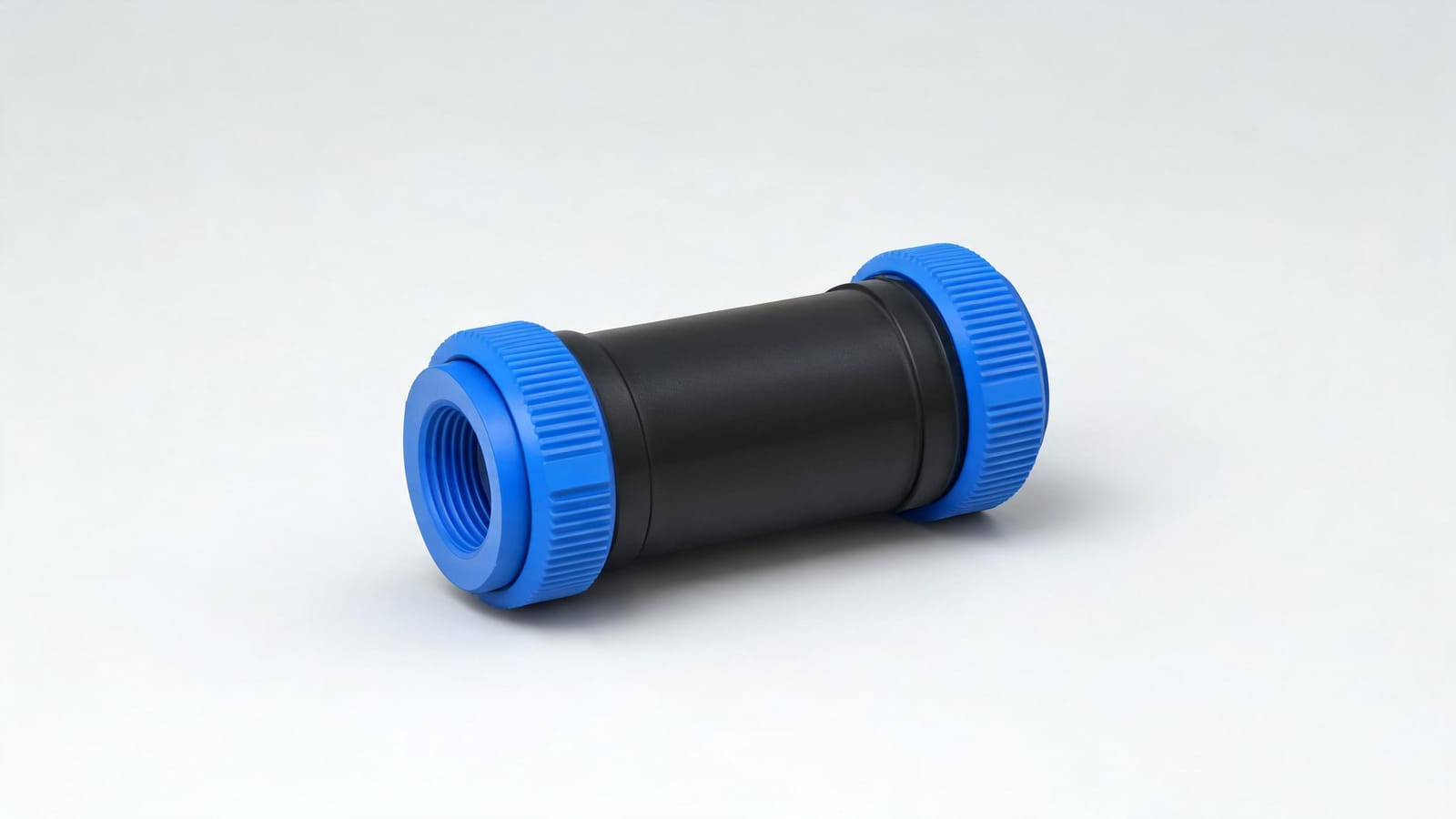
What are polyethylene fittings and how many types are there?
Polyethylene fittings are the parts that join two pipes, change the direction of a line, branch off it, change its size or close its end. Without the right fitting any pipe leaks at the joint, so choosing the fitting matters as much as choosing the pipe.
They come in three main families: compression fittings, which are fitted with a nut and an O-ring and no welding; butt-fusion fittings, which are welded to the pipe end; and electrofusion fittings, which are welded with an electric current. The choice between them depends on the pipe diameter, the type of network, whether water, sewage or gas, and what is possible at the site.
Compression fittings for polyethylene pipe, 20 to 125 mm
Compression fittings are made of polypropylene and are installed on site with no welding machine and no electricity. A rubber O-ring seals the joint completely and a locking ring stops the pipe pulling out, and the part can be opened and reused when an irrigation layout changes.
They suit working pressures up to 10 bar in water supply and farm lines and resist sunlight and the chemicals in soil well. Couplings, reducing couplings, elbows, tees and end caps are available from 20 to 125 mm, and clamp saddles for taking an outlet off the pipe go up to 315 mm.
| Part | Size (mm) | Use |
|---|---|---|
| Equal compression coupling | 20–125 | Joining two pipes of the same size |
| Reducing compression coupling | 25–125 | Joining pipes of different sizes |
| 90° compression elbow | 20–125 | A 90-degree change of direction |
| Compression tee, equal and reducing | 20–125 | A 90-degree branch |
| Compression end cap | 20–125 | Closing the end of a line |
| Clamp saddle | 32–315 | A threaded outlet taken from the pipe |
Butt-fusion fittings for polyethylene pipe, 63 to 630 mm
Butt-fusion fittings are made of polyethylene itself and are welded to the pipe end by butt fusion, which gives one continuous line of a single material. They are used in water supply, sewage and gas distribution and are supplied to EN 12201-3.
They suit the larger diameters of main lines. Elbows and flange adaptors are available from 63 to 630 mm, tees and reducers from 110 to 315 mm, and butt-fusion end caps from 90 to 400 mm. A flange adaptor with a backing ring connects polyethylene to a valve, a pump or a metal pipe.
| Part | Size (mm) | Use |
|---|---|---|
| Butt-fusion elbow, 90° and 45° | 63–630 | Changing direction |
| Butt-fusion tee, equal and reducing | 110–315 | Branching on pressure lines |
| Concentric butt-fusion reducer | 110–315 | Changing the line size |
| Butt-fusion end cap | 90–400 | Permanently closing the end of a line |
| PE stub end (flange adaptor) | 63–630 | A flanged joint to a valve, pump or metal pipe |
Electrofusion fittings for polyethylene pipe, 20 to 250 mm
Electrofusion fittings have a heating wire built into the body and are welded with an electrofusion control unit. The pipes do not have to be turned or moved, so these fittings suit line repairs, joining coils and tight spaces where butt fusion is difficult.
They are supplied for gas networks to EN 1555-3 and for water to EN 12201-3. Electrofusion couplers are available from 20 to 250 mm, and the tapping tee, with a built-in cutter, lets you branch off a live line without a pressure drop. You can also get the electrofusion control unit from us.
| Part | Size (mm) | Use |
|---|---|---|
| Electrofusion coupler | 20–250 | Joining two pipes of the same size |
| Electrofusion tapping tee | 25–250 | Live tapping with a built-in cutter |
| PE-to-metal transition fitting | 20–63 | Joining a PE network to a riser, meter or metal pipe |
Which polyethylene fitting should you choose?
These rules follow from the size range and use of the parts themselves. For farm irrigation and small water lines up to 125 mm, compression fittings make the most sense because they go in without a machine or power and can be reused when the layout changes. For large-diameter water and sewer mains, butt-fusion fittings make one continuous line and are available up to 630 mm.
For gas networks, line repairs and tight spaces, electrofusion fittings suit best, and to connect polyethylene to a valve, pump or metal pipe you use a flange adaptor with a backing ring or, on gas networks, a transition fitting. These are general rules: the final choice depends on working pressure, the fluid, site conditions and the client’s requirements and should be made with an expert, especially for gas networks, which have their own rules and approved installers.
Table of Contents
Caspian Sanat ZAAL
Product technical guides
These guides are based on the standards and technical data of the products themselves. Contact us to confirm the size and pressure class for your project.