
What Is Drip Tape? Roll Length, Roll Weight and Emitter Spacing
A guide to drip irrigation tape: 1,000 m rolls, 9 to 11 kg roll weights, 10 to 30 cm emitter spacing, slit versus flat-emitter tape, and lateral pipe and micro tubing.
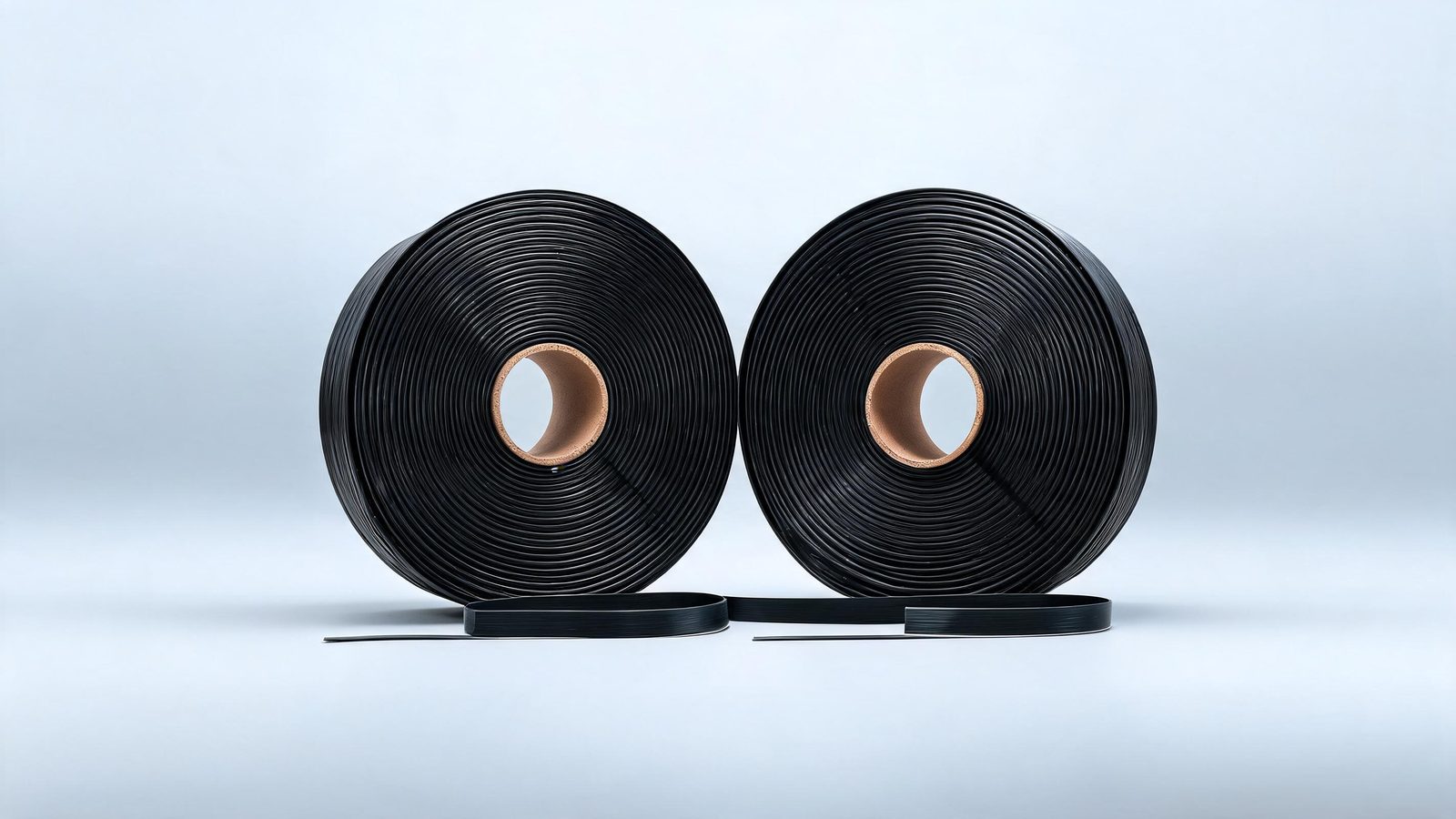
What is drip tape?
Drip tape is a thin, flexible polyethylene tube for drip irrigation with water outlets at regular intervals along its length. It is laid beside the crop row and delivers water drop by drop to the foot of the plants, so less water is wasted and the ground between rows stays dry.
Because its wall is thin, drip tape is supplied in long rolls and is mostly used for row crops and large fields. Choosing a tape comes down to three things: the roll weight, which reflects the wall thickness; the spacing of the emitters; and the type of tape, which is either slit or flat-emitter.
How long and how heavy is a roll of drip tape?
The drip tape Caspian Sanat ZAAL supplies is 16 mm in diameter and comes in 1,000 m rolls. Drip tape is usually described by the weight of a 1,000 m roll, and we supply 9, 9.5, 10, 10.5 and 11 kg rolls, all in the same 1,000 m length and 16 mm diameter; the 10 kg tape is our best-selling weight.
Because a roll is 1,000 m long, its weight in kilograms equals the weight of one metre in grams: a metre of 9 kg tape weighs about 9 g and a metre of 11 kg tape about 11 g. With length and diameter fixed, a heavier roll means more material per metre and a thicker wall.
| Roll weight (kg) | Roll length (m) | Weight per metre (g) |
|---|---|---|
| 9 | 1000 | 9 |
| 9.5 | 1000 | 9.5 |
| 10 | 1000 | 10 |
| 10.5 | 1000 | 10.5 |
| 11 | 1000 | 11 |
What emitter spacing should drip tape have?
The distance between water outlets on the tape is the emitter spacing, and we supply tape with 10, 15, 20 and 30 cm spacing. In light, sandy soil water moves down more than sideways, so the wetted spots are small and emitters need to be closer together; in heavy, clay soil water spreads further and a wider spacing can still wet the row evenly.
Plant spacing matters too: the closer the plants stand along the row, the more sense a shorter spacing makes so that every plant gets water. These are general rules, and the exact spacing depends on the crop, soil texture, slope and row length, so the final choice should be made with an irrigation expert for the conditions of that field.
Should you choose 9 kg or 11 kg drip tape?
The thicker wall of the heavier rolls, 10.5 and 11 kg, resists mechanical damage, sunlight and handling better and probably withstands more pressure, so it makes more sense for use over several seasons or on harder ground. The lighter rolls, 9 and 9.5 kg, give more metres per kilogram of material and are more economical for a single season.
The 10 kg tape sits between the two. The exact wall thickness in microns and the allowable pressure of each weight depend on the material and the manufacturer, so the final weight should be chosen with an expert, taking into account pump pressure, row length, the number of seasons of use and the growing conditions. Talk to our team before you buy.
Slit or flat-emitter drip tape?
In slit drip tape the water outlet is a slit cut into the tape itself. We supply it in roll weights from 9 to 11 kg and with 10, 15, 20 and 30 cm spacing. Slit tape has a simple structure and is widely used for row crops in fields of many different sizes.
In flat-emitter drip tape a flat emitter sits inside the tape wall and spreads water along long rows more evenly than slit tape. It is also supplied at 16 mm with 10, 15, 20 and 30 cm spacing. The choice between the two depends on row length and how even the irrigation needs to be.
What are lateral pipe and micro tubing?
Lateral pipe is a soft, flexible low-density polyethylene pipe supplied in coils at 16 and 20 mm. It carries water from the main line to trees and plants, drippers are fitted along it, and it is used in orchards, landscaping and greenhouses. It is joined with lateral fittings, without any welding.
Micro tubing, also called spaghetti tube, is a thin 4 or 6 mm tube that carries water from the lateral pipe or a dripper to the foot of trees, pots and plants. It is cut with scissors and fitted without special tools. For current prices of drip tape, lateral pipe and micro tubing, send the items you need through the inquiry form.
Table of Contents
Caspian Sanat ZAAL
Product technical guides
These guides are based on the standards and technical data of the products themselves. Contact us to confirm the size and pressure class for your project.