
What Is Corrugated Pipe and What Does SN Class Mean?
An overview of double-wall corrugated sewer pipe construction, SN4 to SN16 ring stiffness classes, and gasketed socket installation in gravity systems.
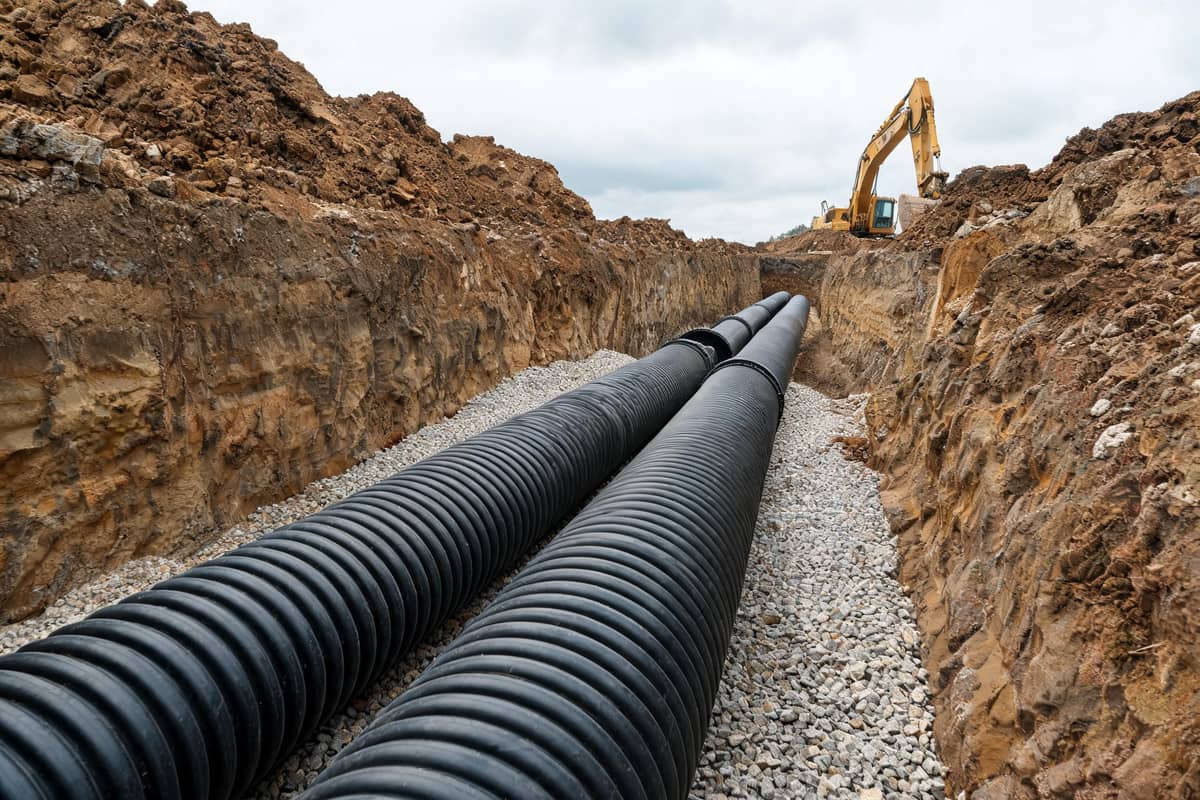
Double-Wall Construction of Corrugated Sewer Pipes
Double-wall corrugated pipe consists of two distinct polyethylene layers co-extruded simultaneously and fused into an integral composite structure. The interior waterway is completely smooth and uniform to minimize hydraulic friction, keeping wastewater and surface stormwater flowing freely while preventing the accumulation of sediment, slime, or blockages along the line.
Conversely, the exterior layer exhibits a profiled, corrugated geometry that dramatically elevates the pipe cross-sectional moment of inertia. This engineered geometry provides robust ring resistance against backfill overburden and vehicular surface loads without excessive raw material consumption or weight. The pipes are manufactured to EN 13476-3 and ISO 21138 standards for non-pressure gravity networks.
Ring Stiffness (SN) Classes and Selection Criteria
Ring stiffness, designated by the abbreviation SN, is the standard metric evaluating pipe resistance against radial deflection and ovalisation under buried soil loads and traffic. Ring stiffness is expressed in kilonewtons per square metre (kN/m²); for example, class SN8 denotes a nominal ring stiffness of at least 8 kN/m² in mechanical ring tests.
This product is supplied in three standard stiffness ratings: SN4, SN8, and SN16. Class SN4 is generally suitable for shallow trench cover in non-trafficked easements. Class SN8 is the predominant specification for municipal sewer networks beneath city roadways, while class SN16 is specified for deep trench depths or heavy transport corridors based on engineering calculations.
Sizing Principle Based on Inside Diameter (ID)
A major distinction between corrugated pipe and solid-wall pressure pipe is the dimensional sizing convention. While pressure pipes are designated by nominal outside diameter, double-wall corrugated pipes are sized by internal bore or inside diameter (ID). The product catalog covers inside diameters from 150 mm up to 1200 mm for gravity networks.
This sizing convention stems from gravity flow hydraulics, where pipeline discharge capacity depends directly on the net internal cross-sectional waterway. Because external corrugation profile heights vary across different stiffness classes, establishing inside diameter as the reference parameter ensures consistent hydraulic design capacity regardless of the specified external profile stiffness.
Socket and Gasket Jointing and Inquiry Guidance
Double-wall corrugated pipes are joined using integral sockets and elastomeric rubber sealing gaskets. The gasket is positioned into the specified corrugation valley on the pipe spigot, lubricated, and pushed straight into the mating socket. This joint provides a tight seal against root penetration and exfiltration without requiring electrical generators or welding machinery.
Supplied in standard 6 m straight bars, these pipes are designed strictly for gravity sewer duty and must not be used in pressurized lines. To review technical details and receive a current price for your project sizes and SN ratings, submit your list via the website inquiry form or contact our sales team by phone.
Table of Contents
Caspian Sanat ZAAL
Product technical guides
These guides are based on the standards and technical data of the products themselves. Contact us to confirm the size and pressure class for your project.